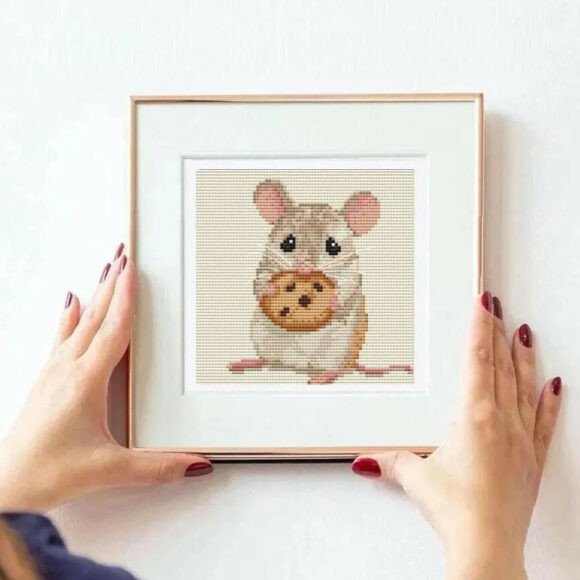
Mouse with Chocolate Cookie Cross Stitch Review
As a professional embroidery designer who has spent years curating machine embroidery design assets for small business owners, I approach every new file with a critical eye. The market is flooded with generic patterns, but finding a piece that balances charm with commercial viability is rare. Today, I am reviewing the Mouse with Chocolate Cookie Cross Stitch pattern to determine if it holds up as a serious asset for branded merchandise, patches, and custom apparel. This isn't just about making something cute; it is about creating a visual identity that resonates with customers while standing the test of time on fabric.
First Impressions: A Playful Yet Professional Aesthetic
The moment I opened the digital preview of the Mouse with Chocolate Cookie Cross Stitch, the vibe was immediately clear. It exudes a friendly, rustic, and handmade personality. The concept of a small, mischievous mouse nibbling on a delicious chocolate cookie taps into universal feelings of comfort and indulgence. For a brand looking to project warmth rather than corporate stiffness, this design hits the mark perfectly. It feels less like a sterile logo and more like a story told through thread.
However, in the world of commercial embroidery, "cute" must not come at the expense of clarity. The design features distinct shapes that translate well from a screen to a needle path. Unlike overly complex illustrations that can get lost in translation, the mouse and cookie have defined outlines. This makes it an excellent candidate for embroidered patch production, where clean edges are crucial for durability and visual impact. The aesthetic suggests a boutique bakery, a cozy café, a pet-friendly florist, or a creative studio that values whimsy and quality.
Evaluating Real-World Business Applications
When we move from the screen to the shop floor, the true value of a digital embroidery file becomes apparent. How does the Mouse with Chocolate Cookie Cross Stitch perform when applied to actual products? Let's break down its potential across various small business merch categories.
Uniforms and Staff Apparel
For staff uniforms, particularly in food service or retail, this design works beautifully as a chest accent or sleeve detail. Imagine a baker wearing a white apron with a small, embroidered mouse on the pocket. It adds a personal touch that customers notice and remember. On darker fabrics, such as navy blue chef coats or black aprons, the contrast of the chocolate cookie and the greyish-brown mouse creates a striking visual. This is where apron embroidery elevates a standard uniform into a brand statement. It signals to the customer that the business cares about details and enjoys what they do.
Caps and Headwear
Cap embroidery presents unique challenges due to curved surfaces and limited space. The compact nature of the mouse and cookie makes this design suitable for a front-panel placement on a baseball cap. Because the elements are relatively self-contained, they won't distort significantly on the curve of a hat. This makes it an ideal choice for promotional giveaways, event merch, or loyalty rewards for your most frequent customers. A high-quality cap featuring this motif feels like a premium gift rather than cheap swag.
Tote Bags and Product Packaging
For eco-conscious brands, a tote bag design featuring the Mouse with Chocolate Cookie Cross Stitch serves as a walking billboard. The cross-stitch aesthetic aligns perfectly with the "handmade" and "artisanal" narratives often used by Etsy sellers and local crafters. Furthermore, this graphic can be adapted as a label or hangtag for product packaging. Whether it is a box of cookies, a jar of jam, or a set of candles, the image reinforces the theme of sweetness and care. It acts as a subtle yet effective branding element that enhances the perceived value of the finished product.
Technical Considerations for Production
While the visual appeal is strong, a professional designer knows that execution is everything. Before committing to a bulk run of custom apparel, there are several technical factors to evaluate regarding this specific Graphics file.
Stitch Density and Fabric Texture
One of the primary concerns with cross-stitch style designs is stitch density. If the file is too dense, it can pucker thin fabrics like cotton tees or linen aprons. Conversely, if it is too sparse, the design may look unfinished. I recommend testing the Mouse with Chocolate Cookie Cross Stitch on a scrap piece of your target material first. Pay close attention to how the threads lay over one another. If you are using textured fabric, ensure the stabilizer is robust enough to support the weight of the stitches without distorting the weave.
Color Contrast and Thread Selection
The charm of this design relies heavily on the interplay between the mouse's fur and the rich brown of the cookie. When selecting thread colors, avoid shades that are too similar to the background fabric. For instance, placing a light brown mouse on a beige tote bag will result in poor visibility. Always create a printable mockup to visualize the color combinations before stitching. High contrast ensures the design pops, which is essential for brand identity recognition.
Scalability and Hoop Size
Not all designs scale equally. While the mouse and cookie are adorable at a medium size, shrinking them down too much for a tiny button or a small collar patch can cause the details to blur. You must confirm the minimum viable hoop size for this specific embroidery file. If the details become muddy below a certain inch measurement, it is better to use the design as a larger focal point on a tote bag or jacket back rather than risking a blurry patch on a cap.
Strategic Branding and Customer Engagement
Incorporating the Mouse with Chocolate Cookie Cross Stitch into your product line goes beyond aesthetics; it influences how customers perceive your brand. A cohesive visual language builds trust. When a customer sees this playful, high-quality embroidery on a staff member's shirt and then again on their purchased tote bag, it creates a sense of consistency and professionalism.
This design fosters engagement. People love to share photos of unique, handmade-looking items on social media. A well-executed embroidered patch or logo invites interaction. It tells a story of craftsmanship and attention to detail, which are key drivers for handmade product sales. By choosing a design that feels authentic, you differentiate yourself from competitors using generic clip art.
Designer Checklist for Implementation
Before you finalize your order or start stitching, run through this practical checklist to ensure success:
- Test in Black and White: Verify the silhouette and outline clarity without relying on color.
- Check Small Scale Viability: Ensure the mouse's features remain distinct when scaled down for patches.
- Review Color Contrast: Confirm the thread colors stand out against your chosen fabric base.
- Inspect Spacing: Make sure there is adequate room around the design for hooping and trimming.
- Confirm Hoop Size: Match the design dimensions to your machine's capabilities.
- Test on Real Fabric: Always stitch a sample on the actual material intended for production.
- Use Proper Stabilizer: Select a stabilizer that matches the weight and stretch of your fabric.
- Create a Mockup: Generate a realistic image for client approval before mass production.
- Compare Design Assets: Place the design next to other logos to ensure visual harmony.
- Verify Licensing: Double-check the commercial license terms to ensure legal use for business purposes.
Final Verdict
The Mouse with Chocolate Cookie Cross Stitch is a versatile and charming addition to any design assets library. It successfully bridges the gap between decorative art and functional branding. For small business owners, Etsy sellers, and apparel decorators, it offers a delightful way to inject personality into uniforms, patches, and merchandise. With careful attention to stitch density, color selection, and scaling, this design can become a signature element of your brand, driving recognition and delight among your customers. Just remember to validate the technical specifics before your first production run, and you will have a winner on your hands.